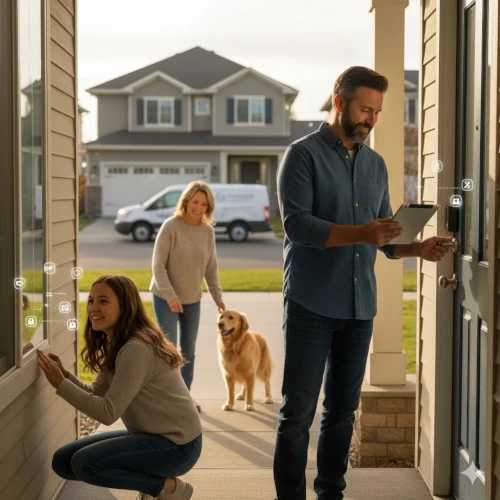
Weekend Home Security Check: 10 Quick Fixes That Make a Big Difference
You do not need a full renovation to make your home safer. Use this simple weekend checklist to walk around your house, fix the basics and close the most common security gaps.
A safer home in a single weekend
Home security can feel like a huge project, with cameras, alarms, smart locks and long to do lists. The truth is that many break ins are stopped or made much harder by simple, low cost details: better screws, stronger strike plates, working deadbolts and good lighting.
This checklist is designed for a relaxed weekend. Grab a coffee, walk around your home and use these 10 quick checks to spot easy improvements. You can handle many of them yourself, and a locksmith can help with the rest.
1. Front door: is the deadbolt doing its job?
Start with the front door, because it is still one of the most common entry points. Ask yourself:
- Does the door have a proper deadbolt, not just a knob lock?
- Does the deadbolt extend fully into the frame when you lock it?
- Does the door close and latch smoothly without forcing it?
A solid door with a working deadbolt is a huge step up from a basic knob lock on its own. If you only have a knob lock, note this as a priority for an upgrade.
2. Strike plates and screws: small parts, big impact
The strike plate is the metal piece on the door frame where the latch and deadbolt go in. On many homes, the screws holding it are short and only bite into the soft frame, not the stud behind it.
Open the door and look at the screws in your strike plates:
- If they are short, consider replacing them with longer screws, for example 7 to 8 cm.
- Make sure the strike plate is not loose, bent or damaged.
This small change helps the door resist force much better and can turn a weak point into a much stronger one.
3. Back doors and garage entry: no weak side entrances
Many people focus on the front door and forget the door from the garage into the house or a side or back door. Burglars know this and often prefer these quieter entry points.
Walk around and check:
- Back door and side doors have proper deadbolts, not only simple knobs.
- Garage entry door is as solid and well locked as the front door.
- There are no visibly loose hinges, cracked frames or broken latches.
Side and back doors should not be the weak link in an otherwise secure home.
4. Sliding doors and patio doors
Sliding glass doors are beautiful but often less secure out of the box. The built in locks can be light duty, and tracks can sometimes be lifted or forced.
Check your sliding and patio doors for:
- A working latch that fully closes and hooks into the frame.
- An additional security bar or pin in the track to prevent forced opening.
- A snug fit so the door cannot be easily lifted out of the track.
Simple add ons, such as a quality bar in the track or a secondary lock, make these doors much harder to force quietly.
5. Ground floor windows
Ground floor and easily accessible windows are often overlooked. Take a quick tour:
- Make sure each window has a working lock or latch.
- Check for broken catches, cracked glass or frames that do not close tight.
- Pay special attention to windows hidden behind bushes or on the side of the house.
If a window lock is broken or missing, add it to your list for repair. In some cases, additional locks or simple locking devices can be installed quickly and affordably.
6. Outdoor lighting: can people see what happens at your doors?
Good lighting does not physically stop a break in, but it makes it harder for someone to work unnoticed. At night, stand outside and look at your home from the street.
- Are the front and back doors clearly visible and lit?
- Do motion sensor lights or porch lights work correctly?
- Are there dark corners near entrances where someone could hide?
Replacing bulbs, fixing a broken motion sensor or adding a simple light can dramatically improve visibility around your doors.
7. House numbers and visibility for emergency services
Security is also about how quickly help can find you if you ever need it. Clear house numbers make it easier for police, ambulance or locksmiths to find your door.
Ask yourself:
- Are your house numbers easy to see from the street, day and night?
- Are they blocked by plants, decorations or other objects?
- Do they have enough contrast with the background to be readable?
Updating or repositioning house numbers is a small project that helps both security and daily convenience for deliveries and visitors.
8. Spare keys: where are they really?
Spare keys are helpful, but only if they are stored wisely. Weekend is a good time to review where yours are.
- Avoid hiding keys under mats, in flower pots or in obvious fake rocks.
- Make a list of who currently has a key outside your household.
- Consider using a small, good quality lockbox instead of open hiding spots.
The goal is to make sure that a spare key helps the right people in an emergency without becoming a gift to the wrong person.
9. Who has copies of your keys?
Over the years, keys often spread quietly: former roommates, ex partners, cleaners, contractors or neighbors may still have copies.
Take a moment to think through:
- Who has moved away or changed roles but still might have a key?
- Were any keys lost in the past without being replaced or rekeyed?
- Do you feel fully comfortable with everyone who currently has access?
If the answer is no, rekeying your locks is a simple way to reset access and start fresh with a new set of keys.
10. When to call a locksmith for a full review
As you go through this checklist, you may notice patterns: sticky locks, weak doors, missing deadbolts or old hardware that does not feel reliable. This is the perfect time to involve a professional.
A residential locksmith can:
- Inspect your main entry points and explain which improvements matter most.
- Rekey locks so old keys no longer work.
- Install or upgrade deadbolts and strike plates.
- Help you design a simple key plan for your household.
A short visit can turn your weekend notes into real upgrades that protect your home every day.
Final checklist and a friendly reminder
If you have walked through all ten points, you already know more about your home security than most people. The important thing is not perfection, but steady progress: fix what you can today and plan the next steps for the coming weeks.
If you would like help turning this checklist into real improvements, the team at VIP24 Locksmith is ready to assist with lock upgrades, rekeying and practical home security advice.
A few small changes this weekend can make a big difference for your peace of mind all year long.