Rekey or Replace? A Simple Guide to Making Your Home Locks Safer
Moved into a new place, lost a key or had tenants move out? This simple guide explains when it makes sense to rekey your locks, when you should replace them and how a locksmith can help you choose.
New home, missing keys and old locks
Many homeowners ask the same question at some point: should I change my locks completely or can I just rekey them? The situation is usually familiar. You have just moved into a new house, a tenant has moved out, a key went missing last month or you simply realized you do not know who still has a copy.
The good news is that you usually have more than one option. A professional locksmith can often reuse your existing hardware by rekeying it, or upgrade it when it is time for something stronger. This guide breaks down the differences in plain language so you can make a confident decision.
What does rekeying actually mean?
Rekeying is a process that changes the internal pins of a lock cylinder so that old keys no longer work and a new key is required. The lock body stays on the door, but the combination inside is updated.
In simple terms, it is like changing the code inside the lock without changing the lock itself. The locksmith:
- Removes the cylinder from your existing lock
- Rearranges or replaces the small pins inside
- Cuts a new key that matches the new pin pattern
- Tests everything and reinstalls the cylinder
After rekeying, your old keys will no longer turn the lock, but the lock hardware on the door looks exactly the same.
When rekeying is the smart choice
Rekeying is often the best option when the hardware is still in good condition and your main goal is to control who has access. For example:
- You have moved into a new home and do not know who has copies of the old keys.
- A roommate, tenant or contractor who had a key no longer lives or works there.
- You lost a key and want to be sure that it cannot be used to enter your home.
- You want one key that opens several doors, and the locks are compatible.
In these cases, rekeying gives you a fresh start with new keys while reusing hardware that may still be perfectly strong and reliable. It is usually faster and more budget friendly than replacing every lock.
When it is better to replace the lock completely
Sometimes rekeying is not enough or simply not worth it. Full replacement is a better choice when:
- The lock is old, worn or sticks frequently when you turn the key.
- The hardware is low quality and does not offer good protection.
- The lock or door was damaged during a break-in or attempted break-in.
- You want to upgrade to a higher security lock or smart lock.
- The current style of lock does not match your needs, for example a knob lock without a proper deadbolt.
In these situations, investing in new hardware improves both security and everyday convenience. A good deadbolt, installed correctly, is a long term upgrade for your home.
Cost, security and convenience – how they compare
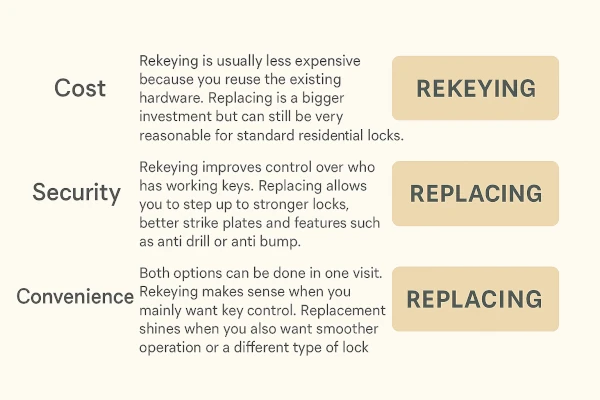
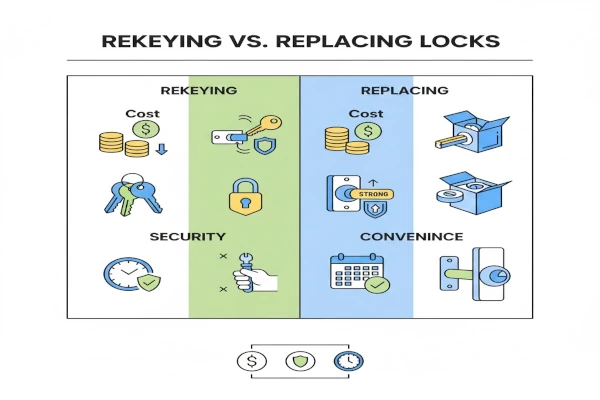
When you compare rekeying and replacing, think in terms of three things: cost, security level and convenience.
- Cost: Rekeying is usually less expensive because you reuse the existing hardware. Replacing is a bigger investment but can still be very reasonable for standard residential locks.
- Security: Rekeying improves control over who has working keys. Replacing allows you to step up to stronger locks, better strike plates and features such as anti drill or anti bump.
- Convenience: Both options can be done in one visit. Rekeying makes sense when you mainly want key control. Replacement shines when you also want smoother operation or a different type of lock.
A locksmith can explain the options for each door so you can upgrade the most important points first and plan additional improvements over time if needed.
One key for the whole house
One nice benefit of rekeying is the possibility of having several locks set to use the same key. This is sometimes called having the locks keyed alike.
For example, you might choose to have:
- Front door deadbolt and handle set on one key
- Back door and garage entry on that same key
- Only a few special doors, such as a home office or storage room, on separate keys
The result is less confusion and fewer keychains. You still control who has access to each area, but daily life becomes easier when one main key covers the doors you use most.
How a locksmith helps you decide
You do not need to decide everything alone. A residential locksmith can walk through the property with you and:
- Check the condition and quality of your existing locks and door frames.
- Explain which locks are good candidates for rekeying.
- Show you options for stronger or smarter replacement hardware where it matters most.
- Design a simple key plan so you know exactly which key opens which door.
A short visit often gives you a clear picture of your current security and a realistic plan to improve it without wasting money.
Final thoughts and a small tip
Whether you choose to rekey, replace or mix both options, the goal is the same: make sure that only the right people have easy access to your home and that your locks work smoothly when you need them.
If you have moved recently, lost a key or simply feel unsure about who might still have a copy of your house keys, this is the perfect time to act. A simple rekey or upgrade today can prevent a much bigger problem tomorrow.
Not sure whether rekeying or replacing is right for you? A quick visit from VIP24 Locksmith can give you clear answers and a plan that fits your home and your budget.
We are here to help you make your locks safer, not just more complicated.