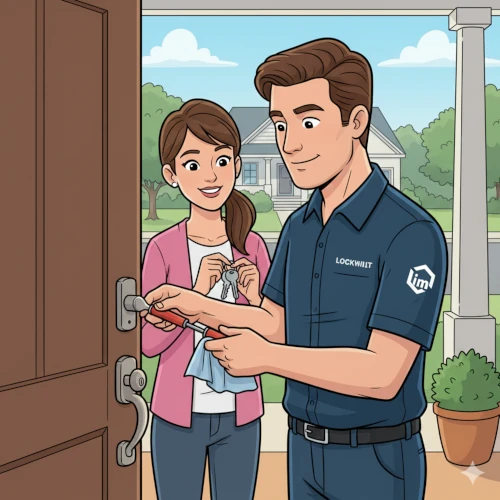
Locked Out of Your Home? 7 Smart Steps Before You Panic
Locked out of your house? Take a breath. Before you panic or try to "DIY" the lock, follow these 7 simple steps to get back inside safely and keep your home secure.
It always happens at the worst time…
You never get locked out on a lazy Sunday afternoon with nothing to do. It is always one of those moments when life is already busy:
- Late at night
- Raining
- You are holding groceries
- Or you are already running late
Suddenly the door closes behind you, you tap your pockets, and your keys are on the wrong side of the door.
If that is you right now, you are not the first and you will not be the last. Here are 7 smart steps to follow before you panic, break something, or injure yourself trying to climb through a tiny window.
1. Check every door (and that one window you always forget)
It sounds obvious, but in real life people immediately fixate on the one locked door in front of them. Take a slow walk around the property and check:
- Front door
- Back door
- Side door or garage entry
- Balcony door (if it is safely accessible)
- Ground floor windows that are actually easy and safe to open
Sometimes a back door or kitchen door is still unlocked from when someone took out the trash. And yes, check that one window you always swear you locked but secretly did not.
2. Ask who else has a key
Before you spend money on an emergency visit, think about your "key network":
- Does your partner have a key and can come by?
- Did you ever give a key to a neighbor you trust?
- Does your landlord or building manager have a copy?
- In some condos, security or the front desk may have spare keys.
A quick round of phone calls or messages might save you time, money and stress. If help is on the way in 10 to 20 minutes, you can skip straight to step 7 and think about what to do after the lockout.
3. Do not "DIY" the lock with knives, cards or screwdrivers
We get it. You have seen it in movies: someone slides a card in the door, wiggles it, and suddenly the door opens.
Real life looks a bit more like this:
- Bent credit cards
- Damaged door frames
- Scratched locks
- And sometimes... a door that is still locked
Trying to force a lock with things like:
- Kitchen knives
- Screwdrivers
- Paperclips
- Random "tools" from a junk drawer
Usually ends with more damage and a higher bill, because the locksmith now has to unlock and also repair what was bent, jammed or broken. If the door is solid and the lock is good quality, movie tricks almost never work. Save yourself the frustration and your tools.
4. When it is time to call a locksmith – what info to prepare
If you have checked all doors and windows, nobody with a spare key is nearby, and you are still stuck, it is time to call a professional locksmith.
Before you call, have this information ready:
- Your exact location (address, apartment number, gate code if needed)
- Type of property – house, apartment, townhouse, and so on
- Type of lock, if you know it (deadbolt, knob lock, smart lock, etc.)
- Any special situation – child or pet inside, stove on, medical issue, and similar cases
This helps the locksmith:
- Give you a more accurate time estimate
- Bring the right tools
- Understand how urgent your situation really is
The more clearly you explain what is going on, the faster and smoother the visit will be.
5. How to ask about price on the phone (and avoid surprises)
When you are stressed, it is easy to say "Just come!" and forget about the price. Two simple questions can save you a lot of headache:
- "What is the price range for a standard house lockout at my location?"
- "What could make the price higher than that?" (for example: special high security lock, late night fee, damaged hardware, and so on)
Look for answers that sound:
- Clear, not vague
- Within a normal range (not unbelievably cheap, not insanely high)
- Consistent with what is written on the website or Google profile
Good locksmiths know roughly what a typical lockout costs and will be transparent with you from the start.
6. How to stay safe during a late night lockout
If you are locked out at night, safety matters just as much as getting back inside.
Here are a few tips:
- Wait in a well lit area where you feel visible and safe, for example near a street, open business or neighbor door.
- Let a friend, family member or neighbor know where you are and that a locksmith is on the way.
- If you feel uncomfortable with anyone who approaches you, keep your distance and stay on the phone with someone you trust.
- When the locksmith arrives, check the company name, vehicle branding (if available) and basic professionalism such as tools, behavior and communication.
Trust your instincts. A real professional will not pressure you or behave in a strange way.
7. What to do after you get back inside
Once you are back in your living room and your heart rate is closer to normal, take a minute to think about prevention and security.
- Lost your keys? Consider rekeying your locks so whoever finds them cannot simply walk into your home.
- Spare key plan: Decide who you trust with a spare – partner, family member, close neighbor, or a small safe in your car.
- Old or weak locks? Ask the locksmith if your current hardware is worth upgrading. A better deadbolt or reinforced strike plate can make a big difference.
- One key for the whole house: In many cases you can have multiple locks keyed alike, so one key works on several doors. Less confusion, fewer keychains, more convenience.
A lockout can be annoying, but it is also a great wake up call to improve how you manage your keys and home security.
Final words (and a small reminder)
If you are currently standing outside, reading this on your phone, take a breath. Do not blame yourself – this happens to people every single day.
Follow the steps above, and when you are ready:
If you are currently outside reading this on your phone – take a breath. Then give VIP24 Locksmith a call.
We will help you get back inside safely – and help you make sure the next time is a lot less likely.